
Bombay Display Board: Flora


The text, images and references of the 'Flora' column as featured on the Bombay display board at Bombay Reserve.
The dominant native plant community along the Shoalhaven River is rocky riparian scrub, characterized by moisture-loving shrubs, such as tea-tree (Leptospermum spp.) and Silver Wattle (Acacia dealbata), as well as semi-aquatic rushes like spiny-head mat-rush (Lomandra longifolia).
Isolated stands of Black Cypress Pine (Callitris endlicheri) occur on terraces above the river, with a small patch remaining near the Bombay Reserve. The habitat is frequently scoured by floods and plants tend to survive in pockets of sandy alluvium. Scattered Ribbon Gums (Eucalyptus viminalis) and Snow Gums (E. pauciflora) can also be found along tributaries like Bombay Creek.

Outside the river corridor, much of the Bombay region was extensively cleared for grazing. Historically, the dominant plant community was likely ‘Palerang Hills Peppermint Dry Shrub Forest’ with areas of Broad-leaved Peppermint, Brittle and Scribbly Gum still remaining (Eucalyptus dives, mannifera and rossii respectively).
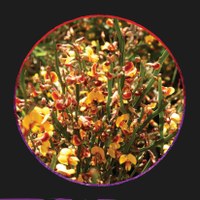
Regrowth is common, and regenerating bush tends to be dominated by heath-like vegetation including Small-leaved Kunzea (Kunzea parvifolia), Roughbarked Honey Myrtle (Melaleuca parvistaminea), Guinea flowers (Hibbertia spp.) and Tea-tree. Scattered She-oaks (Allocasuarina littoralis) can also be found growing on previously cleared ridges.
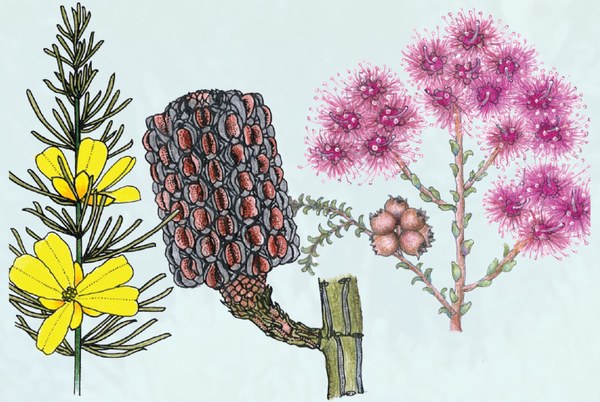
Moving west, the scrubby dry sclerophyll forest opens to patches of introduced pastures and native Kangaroo grasslands (Themeda triandra), before rising into a mixture of taller, wet sclerophyll communities on the slopes of the Tallaganda range.
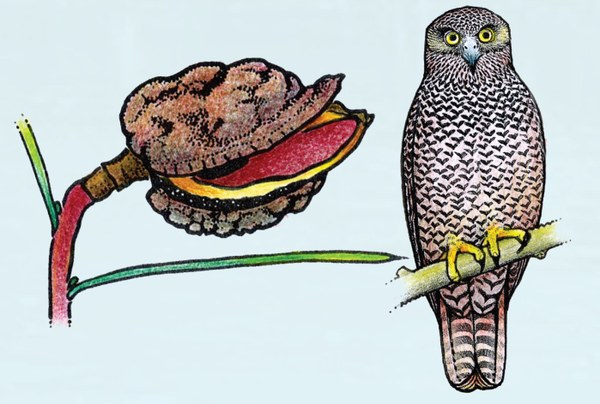
The slopes are interspersed with sheltered fern forests, with patches of Narrow-leaved Peppermint (E. radiata) and Mountain Gum (E. dalrympleana). Hakeas, Banksias and Blackwoods (Acacia melanoxylon) are more common. These tall forests are home to populations of Greater Gliders (Petauroides volans) and Powerful Owls (Ninox strenua).
Weeds are a major threat to our natural environment and agricultural industries. They can spread quickly and be difficult to control, outcompeting our native plants, as well as impacting water courses, soil and fire regimes. Major weed threats in Bombay, especially along the river, include African Lovegrass (Eragrostis curvula), Blackberry (Rubus spp.), Scotch Broom (Cytisus scoparius), Gorse (Ulex europaeus) and Willows (Salix spp).
The NSW WeedWise app or website weeds.dpi.nsw.gov.au is a good resource for identification.

< Previous Column Geology or Next Column Fauna >
Flora References:
- Special thanks to Melita Milner and Mary Appleby for consulting on the Flora column text
- State of NSW and Department of Planning and Environment, 2021, Trees Near Me Explore, retrieved 28 August 2024 from <https://www.treesnearme.app/explore>
- State of New South Wales through Department of Planning and Environment 2023, eSPADE version 2.2, accessed 20 November 2023 <https://www.environment.nsw.gov.au/eSpade2WebApp#>
-
NSW Department of Primary Industries – www.dpi.nsw.gov.au
-
NSW Local Land Services – www.lls.nsw.gov.au
-
QPRC – www.qprc.nsw.gov.au
-
NSW Government – Environment and Heritage




This Bombay Landcare Information Board project was proudly co-funded by Bendigo Community Bank Braidwood, WaterNSW
Bombay Landcare Group and Upper Shoalhaven Landcare Council. With Special thanks to Sheep Station Creek Landcare's Christine Payne and Michael Gill for illustrations and design. Artwork © 2025 C Payne & M Gill. All rights reserved.